Gear, rentals, and skate care.
Everything a skater needs for the season — required safety gear, how to rent speed skates through Coach Mike, how to keep your blades in good shape, and how age categories work.
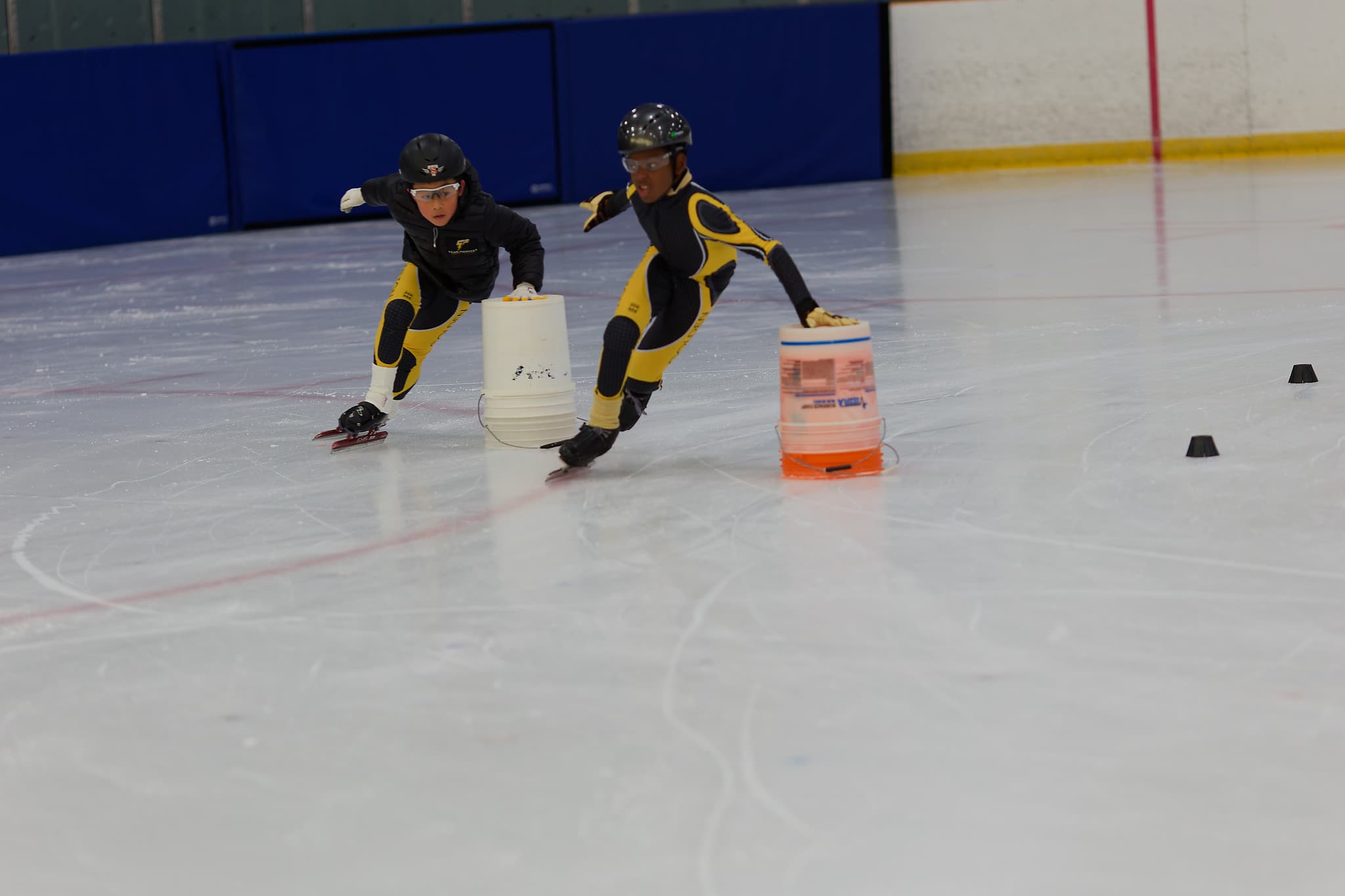
Gear requirements for new skaters
Skaters in Learn to Skate and Learn to Speed Skate only need head, hand, shin, and knee protection. The full safety-gear list below applies to Competitive and Masters, and to Learn to Speed Skate skaters who choose to race.
Required safety gear
What every skater wears on the ice.
Required for all programs. Learn to Skate and Learn to Speed Skate skaters only need head, hand, shin, and knee protection; the full list below applies to everyone else.
- HLM
Helmet
Certified hockey or speed-skating helmet. The club sells a certified competition helmet if you want one specific to the sport.
- EYE
Impact-resistant glasses
Shatter-resistant eyewear protects against ice chips and incidental contact during pack skating.
- GLV
Cut-proof gloves
Cut-resistant gloves — blades are sharp, falls happen, and fingers need protection on the ice.
- NCK
Neck guard
A standard hockey-style neck guard — the same kind worn in minor hockey.
- KNE
Knee pads
Protective knee pads worn under a speed suit or track pants.
- ANK
Ankle guards
Ankle protection worn inside the skate boot. The club sells Kevlar ankle protection if you need them.
Rentals & club sales
Rent speed skates. Buy club-specific gear.
Skate rentals
Speed skates through Coach Mike.
Coach Mike Murray has a large inventory of club speed skates, and rents them for the season to members.
Skate fitting is scheduled after you register and happens before your first practice — you don’t need to track down skates on your own.
Sold by the club
Club-specific gear.
- Kevlar ankle protection
- Certified competition helmet
- Hard skate guards
- HSSC black and yellow skin suits with cut-proof liners
Orders typically happen at the start of the season, with vendors also selling equipment at competitions.
Skate care
Keep your blades fast.
Speed-skate blades are hand-sharpened and unforgiving — a little routine care goes a long way.
- 01
The blades should never be allowed to get dirty or rusty, and the boots should be kept clean and dry.
- 02
Don’t store skates with hard guards on; instead let them dry overnight using skate soakers.
- 03
Skates generally need to be sharpened every 4 – 6 weeks during the season.
- 04
Sharpen skates with Coach Mike. Do not take your skates for sharpening at the local rink or Canadian Tire — speed skates have very different blades and need hand sharpening.
- 05
Wear hard guards while walking off-ice.
- 06
Use soft skate soakers for storage so blades stay dry between practices.
Race categories
How age categories work.
Speed-skating competition categories use gender and a skater’s age as of June 30. Where your skater lands at the cut-off sets their race category for the whole season.
A girl turning 9 on February 5 ranks in “Girls 9”.
A boy turning 9 on July 3 ranks in “Boys 8” — he was still 8 on June 30.
Buying your own gear
Most safety gear comes from your local sporting-goods store.
Helmets, neck guards, knee pads, and gloves are usually bought new at a local sporting-goods store. The club doesn’t endorse specific suppliers — the equipment manager can point you in the right direction if you’re unsure.
Two club-specific options for members:
Questions about equipment?
Email us — we reply personally.
Unsure what your skater needs, or where to buy it? The board answers email directly.
New to the club? Start on Get Started.