New to speed skating? Start here.
Whether you're just learning to stand on skates or already zipping around the rink, we have a spot for you.
How to join
Four steps to the ice.
- Step 1
Pick a program
New skaters usually start in Learn to Skate, Learn to Speed Skate, or Masters. Pick the one that fits below.
- Step 2
Register online
Complete the registration form and pay by e-transfer. Discounts available for families with multiple skaters and for additional weekly sessions.
- Step 3
Get fitted for skates
The club rents speed skates for the season through Coach Mike. Skate fitting is scheduled before your first practice.
- Step 4
Arrive early on day one
On your first practice, arrive a bit early. Someone from the club will greet you and help you get oriented.
Choose your path
Which program is right for me?
Most new skaters start in one of these three. Age ranges are guides — there’s overlap, and Coach Mike can help place you if it isn’t obvious.
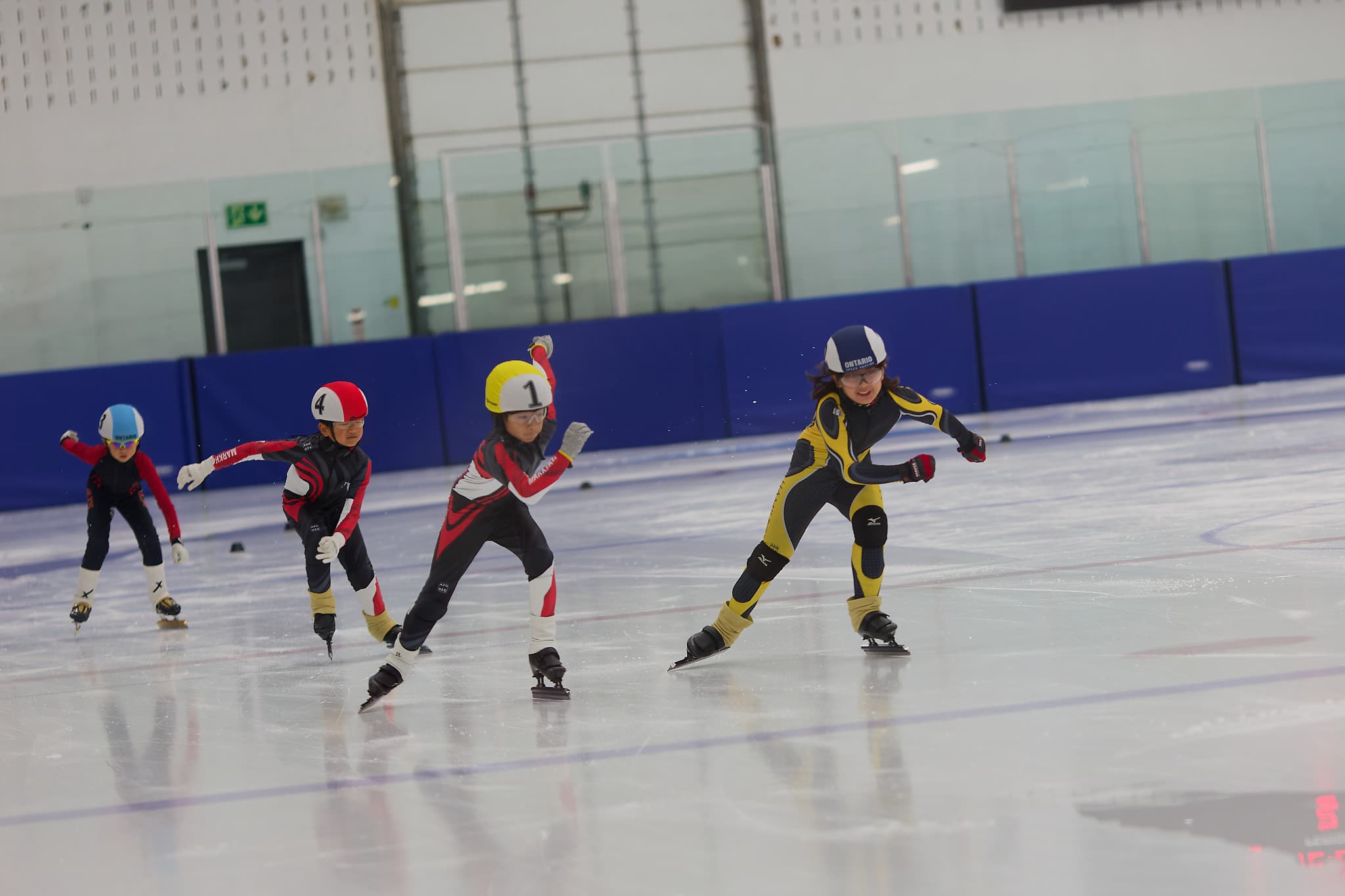
Typically ages 4–12
Learn to Skate
New to skating. Bring your own skates (hockey or figure) and learn the basics in a fun, low-pressure group.
1× / week · Chedoke
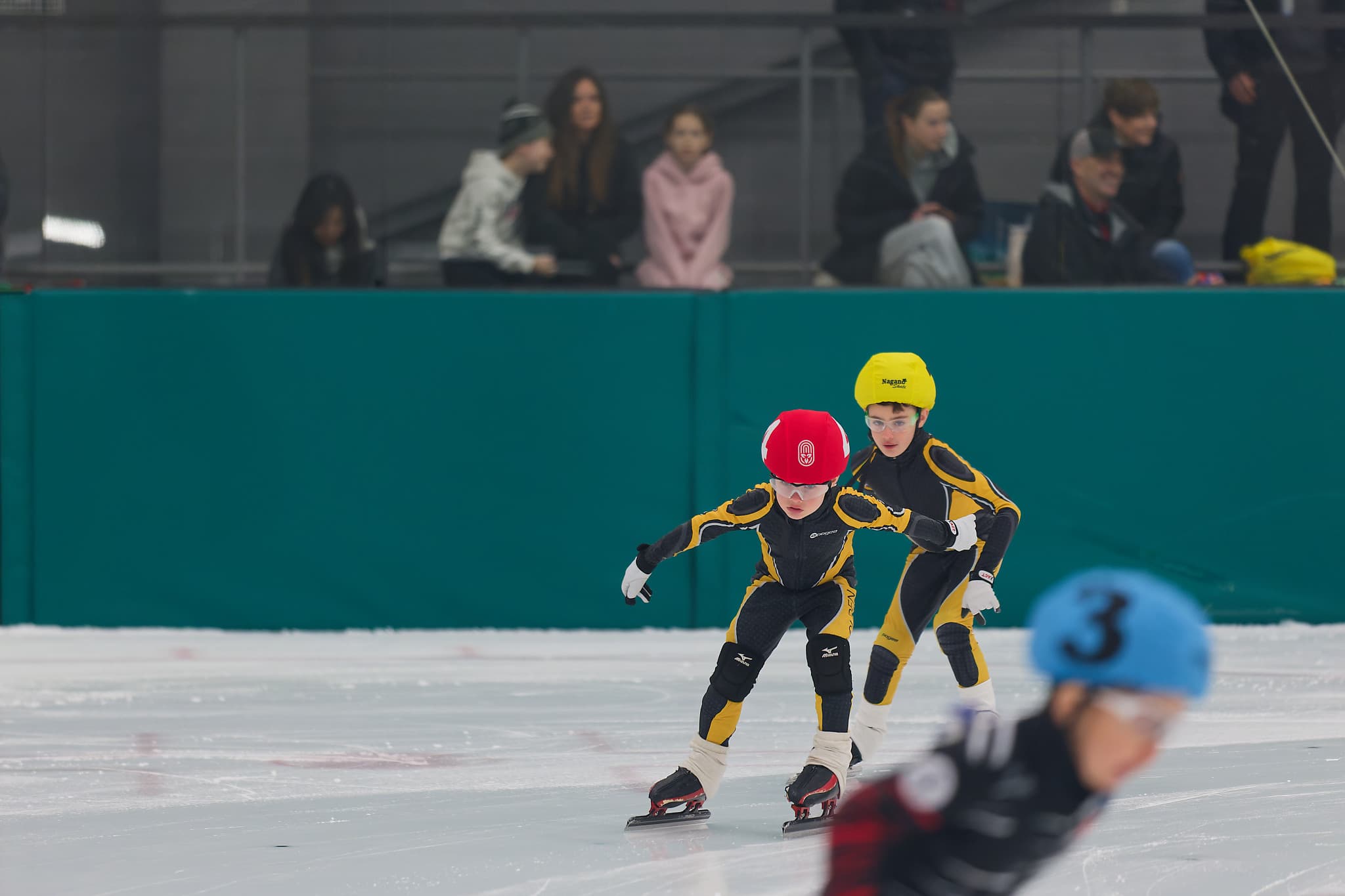
Typically age 6+
Learn to Speed Skate
Comfortable on the ice and ready for speed skates. The club rents skates; you learn the fundamentals of short-track.
1–3× / week · Chedoke + Sherman
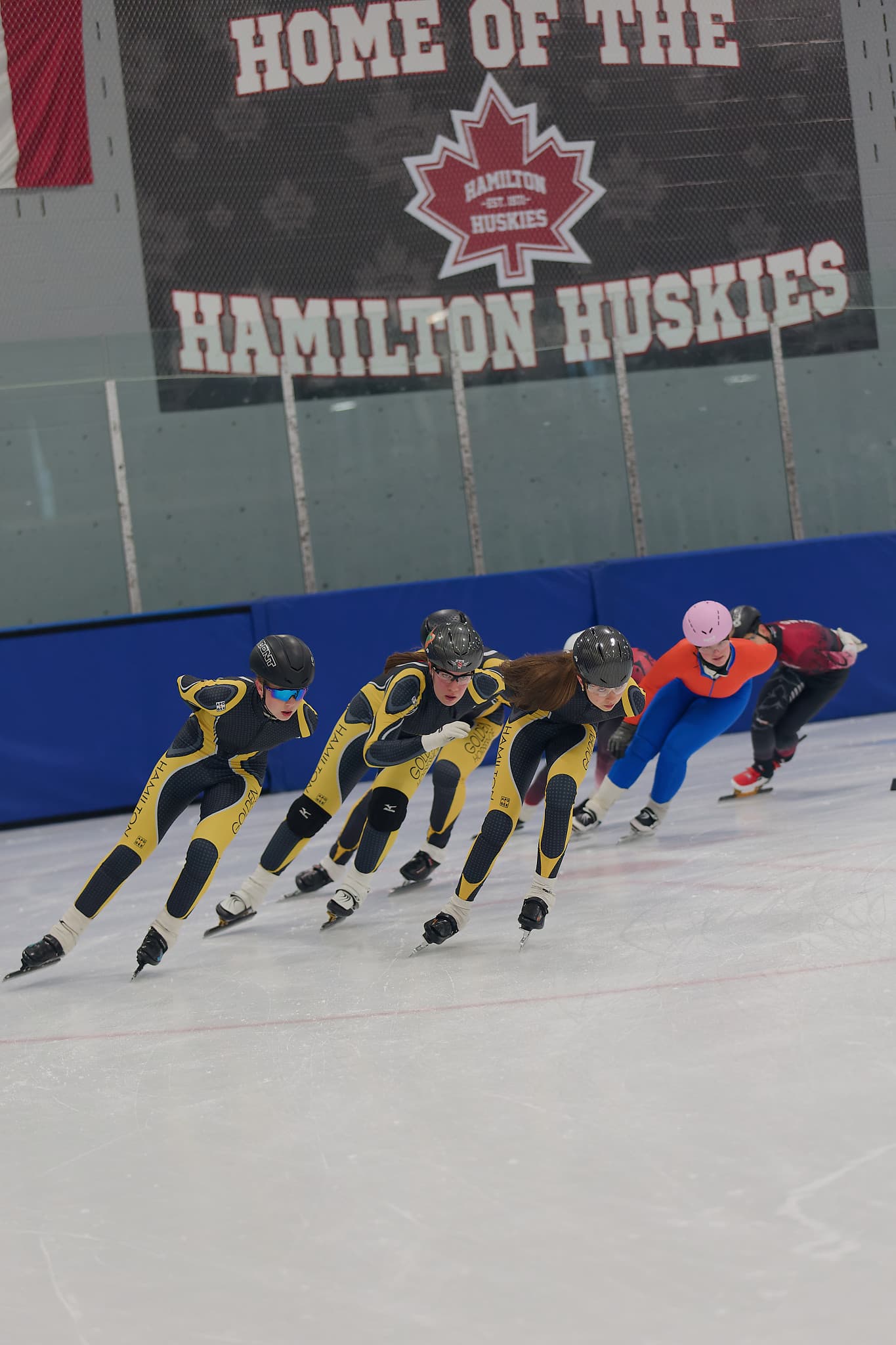
Adults (18+)
Masters
The adult pathway. Open to older skaters and those living in the Golden Horseshoe area — beginners welcome.
1× / week · Sherman
Looking at Competitive?Typically age 11+ with multiple years of racing experience. Coach Mike places skaters there after they’ve trained with us — not a program new skaters sign up for directly. See the Programs page for full detail on every program.
Important
Full-season commitment — we don’t offer drop-in or trial sessions.
Speed skating takes time to click. Committing for the season gives skaters the space to actually progress.
What you’ll need
Bring your safety gear. The club handles skates.
- Head, hand, shin, and knee protection for Learn to Skate and Learn to Speed Skate.
- The full list (helmet, impact-resistant glasses, cut-proof gloves, neck guard, knee pads, ankle guards) applies at higher levels.
- The club rents speed skates for the season through Coach Mike.
- Most safety gear is bought at a local sporting goods store. The club sells a few items (Kevlar ankle protection, certified helmets, skin suits).
A club parent
“Our kids started out in Learn to Skate — now they’re racing against teammates at competitions who have become close friends and fierce rivals.”
Schedule
When we’re on the ice.
Practices run September through March. Programs don’t all skate on every day — your program’s specific times are shared after you register.
- TuesdayF.H. ShermanLearn to Speed Skate · Competitive · Masters
- WednesdayChedokeLearn to Skate · Learn to Speed Skate · Competitive
- ThursdayChedokeLearn to Speed Skate · Competitive
- SundayChedokeLearn to Speed Skate · Competitive
- FridayOff-ice trainingYear-round · Wednesdays in summer too
After you register
What happens between your form and day one.
- 01
Join the mailing list
You'll automatically be added on registration. Keep an eye out for schedule changes and facility closures.
- 02
WhatsApp group
The phone number you register with is added to the club's WhatsApp group for day-to-day communication.
- 03
Skate fitting
If you're renting skates, the equipment manager reaches out to get you fitted before your first practice.
- 04
First practice
New skaters start on September 10th at Chedoke. Arrive a bit early — someone from the club will greet you.
Common questions
What newcomers ask us.
Getting started
Do you offer a trial or drop-in session?
No. We don't offer drop-in or trial sessions — we encourage skaters to commit for a season to really feel the progress. Speed skating takes time and persistence, but it's rewarding once it clicks.
How young can kids start?
Learn to Skate is typically for kids age 4–12 who are new to the ice. Older or more experienced skaters can start in Learn to Speed Skate (typically age 6+). Coach Mike helps place skaters when the fit isn't obvious.
Do I need my own skates?
For Learn to Skate, bring your own skates — hockey or figure skates both work. For Learn to Speed Skate and above, the club rents season-long speed skates through Coach Mike.
What safety gear is required?
For Learn to Skate and Learn to Speed Skate, you need head, hand, shin, and knee protection. At higher levels, the full list is helmet, impact-resistant glasses, cut-proof gloves, neck guard, knee pads, and ankle guards. See the equipment section above.
Where do you practice?
Chedoke Arena in Hamilton (91 Chedmac Dr) and F.H. Sherman Arena in Stoney Creek (388 First Rd East). Different programs run at different arenas — see the schedule above or the Programs page.
When does the season run?
Mid-September to late March. Returning skaters start at Chedoke on September 3rd; new skaters start September 10th. F.H. Sherman starts in October — start date is shared on the mailing list once set.
During the season
Do we have to attend every practice?
No. Skating at least twice a week helps progress, but you don't have to hit every session. If you need to miss one, you can attend an alternate session with prior notice so we have enough coaches.
Can I swap skate sizes mid-season?
Yes — ask Coach Mike. Comfort matters for progress, and skates that fit well are a lot safer.
Can I add extra sessions later in the season?
Yes. Additional weekly sessions can be added partway through the season at a prorated fee.
Is racing required?
No. Plenty of skaters come out just for exercise and the community. We run an informal Christmas party race each season for anyone who wants a low-key taste of it.
Skate care
How often do skates need sharpening, and who does it?
Every 4–6 weeks. Coach Mike handles sharpening — don't sharpen your own skates, and don't take them to a local rink or big-box store. Speed skate blades use a different geometry and need hand sharpening.
How do I take care of the blades after practice?
Dry your skates off right after every practice. Speed skate blades are very high-carbon and rust fast — really fast. (And Mike will know.)
When do I wear hard guards?
Always, anytime you're walking around with your skates on the ground. Hard guards protect the blade from concrete, mats, and anything else off-ice.
What about between practices?
Once you're done skating and have dried the blades, swap the hard guards for soakers (soft cloth covers). Blades sitting in hard guards stay damp all day, which is exactly how rust starts. Soakers wick the moisture away and keep the blade in much better condition.
Cost, volunteering, and contact
How much does it cost?
Fees are based on sessions per week and family size. Discounts for families with 3+ skaters and for multiple weekly sessions. Payment by cash, cheque, or e-transfer to hamiltonspeedskating@gmail.com.
Do parents volunteer?
Yes. The club is entirely volunteer-run. Parents help set up safety mats and pitch in at club-hosted meets. It's part of how a non-technical, parent-led club stays on the ice.
Who runs the club?
Hamilton Speedskating is run by a parent-led board and a team of volunteers. Head coach Mike Murray is a Speed Skating Canada Hall of Fame athlete and CAC-certified National Level Coach, with a team of volunteer coaches alongside him.
Still have questions?
Email us — we reply personally.
We’re a volunteer-run club. Email gets you to a real person who can answer your question or point you at the right coach.